


This article is more than 1 year old
Laser boffins blast bits onto hard drive at 200Gb/sec
Superheating drives forego magnetic write heads

A team of scientists have published a new way of using heat to store data magnetically, which could increase the speed of hard drives over a hundredfold.
Conventional drives use electromagnetism to selectively change the polarity of points on a drive, representing a one or a zero. But according to research published in Nature Communications, the team used a high-powered laser to write data onto a special gadolinium and iron storage unit in a fraction of the time, using much less energy.
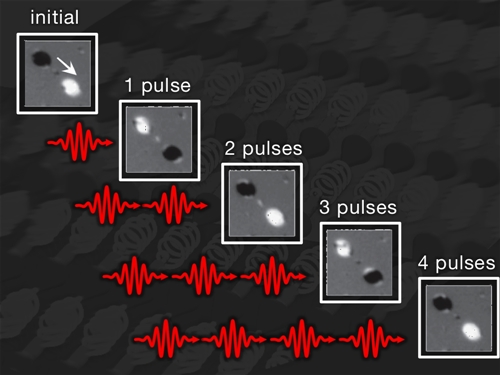
One pulse for 0, two for 1
“Instead of using a magnetic field to record information on a magnetic medium, we harnessed much stronger internal forces and recorded information using only heat,” said York physicist Thomas Ostler in a statement. “This revolutionary method allows the recording of Terabytes (thousands of Gigabytes) of information per second, hundreds of times faster than present hard drive technology. As there is no need for a magnetic field, there is also less energy consumption.”
The laser fires for 1/10,000 of a nanosecond, and the team found it could write precisely on the drive. Using lasers in this way isn’t new – TDK is already using its heat-assisted magnetic recording (HAMR) systems in a similar way – but the new technique achieved write speeds well in advance of any competing technology.
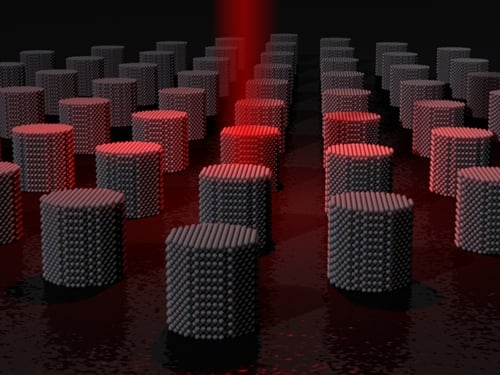
Laser activation creates insane storage speeds
Dr Alexey Kimel, from the Institute of Molecules and Materials, Radboud University Nijmegen, said: “For centuries it has been believed that heat can only destroy the magnetic order. Now we have successfully demonstrated that it can, in fact, be a sufficient stimulus for recording information on a magnetic medium.”
The technique is still a long way from being able to match conventional drives in terms of cost and ease of manufacturing, due to the use of the laser and specialized materials, but the team is now refining the technique and feels it has scope for full production. ®
 Biting the hand that feeds IT

