This article is more than 1 year old
Cybercrooks plant phishing scam on crime reduction website
Home Office pwned

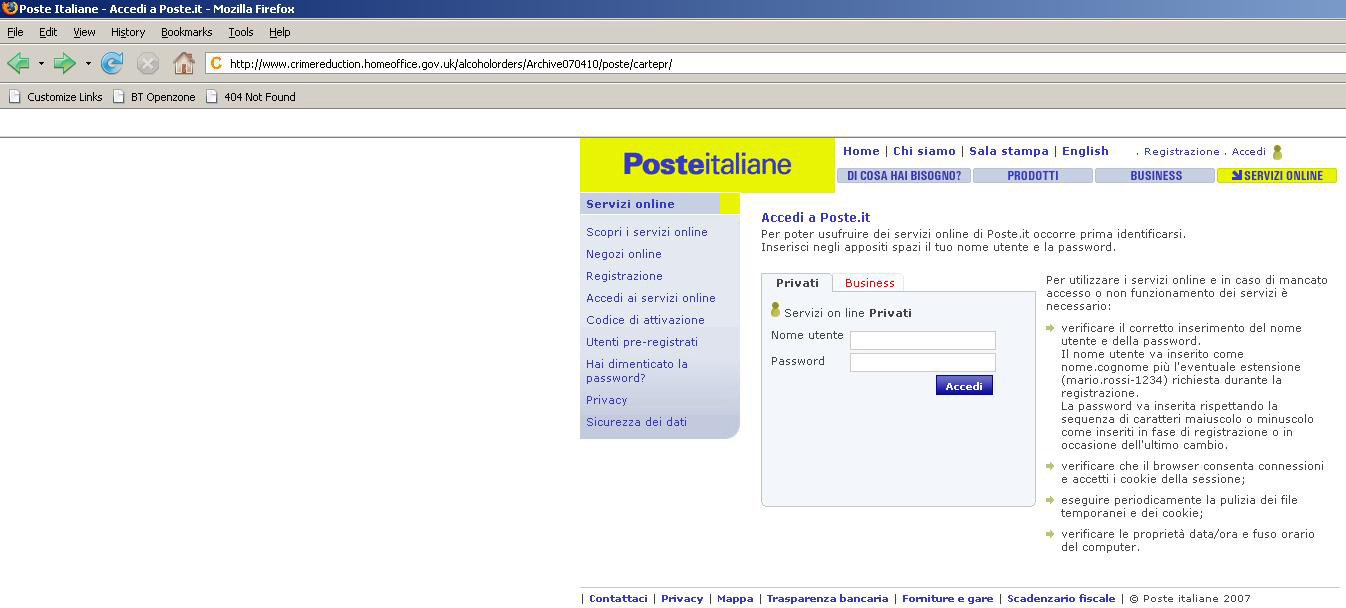
Phishing fraudsters hacked a Home Office crime reduction website to host an Italian phishing website on Monday.
An RFI (Remote file inclusion) exploit was used to launch the phished page off the webserver hosting crimereduction.homeoffice.gov.uk. As a result of the SQL Injection attack a page resembling the Poste.it site was served up so that it appeared to come from the homeoffice.gov domain. Poste.it is the website of an Italian bank and is a frequent target of phishing attacks.
Net security firm PrevX, which detected the attack, reckons phishing fraudsters used the POST method so that phished data submitted by prospective marks was sent to them. Quite why they picked a government page, much less one in the UK, to host a phishing attack remains unclear beyond possible motives of showing off or "sticking it to the man".
The Home Office pulled the rogue content from its site early on Monday morning. The attack is the latest example of cybercriminals abusing security exploits on trusted websites to serve up fraudulent content. SQL Injection attacks are a favorite attack strategy. The long-standing approach, used to hack thousands of website, including US Department of Homeland Security and UK government sites last month, has now been applied to target a Home Office-run crime reduction website.
"This is very embarrassing for the Home Office, having the Crime Reduction website hacked by cybercriminals is a bit like having a mugger hiding in the local police station nicking people's wallets when they come in," said Jacques Erasmus, head of malware research at Prevx. ®
 Biting the hand that feeds IT