


This article is more than 1 year old
Asus orders Commando into action
Overclockers targeted

Asus has announced its overclocker-friendly Commando motherboard, a product based on Intel's P965 chipset and which allows users to turn their PCs' frontside bus and memory clocks up to 2.28GHz and 1.3GHz, respectively.
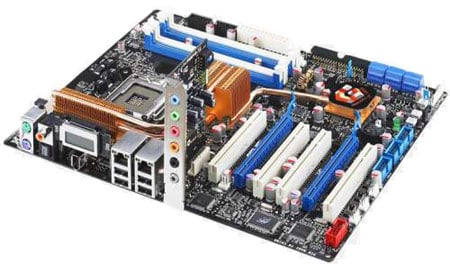
The Commando supports up to 8GB of dual-channel DDR 2 SDRAM and provides a pair of PCI Express x8 for AMD CrossFire multi-GPU gaming. The board will take any of today's Core 2 Duo and Core 2 Extreme processors, and is ready for Intel's upcoming four-core Core 2 Quad.
The board will also play host to six 3Gbps SATA drives and two parallel ATA units. It has four USB ports, two Gigabit Ethernet connectors, a 400Mbps Firwire port, S/PDIF co-ax and optical output, and four regular PCI slots.
For overclockers, the Commando is designed to work with an eight-phase capacitor-less power supply, Asus said, for a high level of stability. The board also features a back-panel LCD which displays the ID of any process that's caused the system to crash. The mobo also has on-board power, reset and CMOS clear buttons.
Asus didn't say when the Commando is due to go on sale, or what it will cost. We understand it's likely to retail for around £165 ($322/€246) inc VAT. ®
Related reviews
Intel vs AMD - integrated graphics shoot-out
Intel Core 2 Extreme QX6700 quad-core CPU
Abit AW9D-Max 975X-based mobo
Supermicro PDSBA G965-based mobo
MSI P965 Neo-F Core 2 Duo mobo
Asus P5B Deluxe Wi-Fi AP motherboard
Biostar TForce P965 Deluxe
 Biting the hand that feeds IT

